N011 - Competition Entry for the
New Municipal Market of Ioannina [2025]
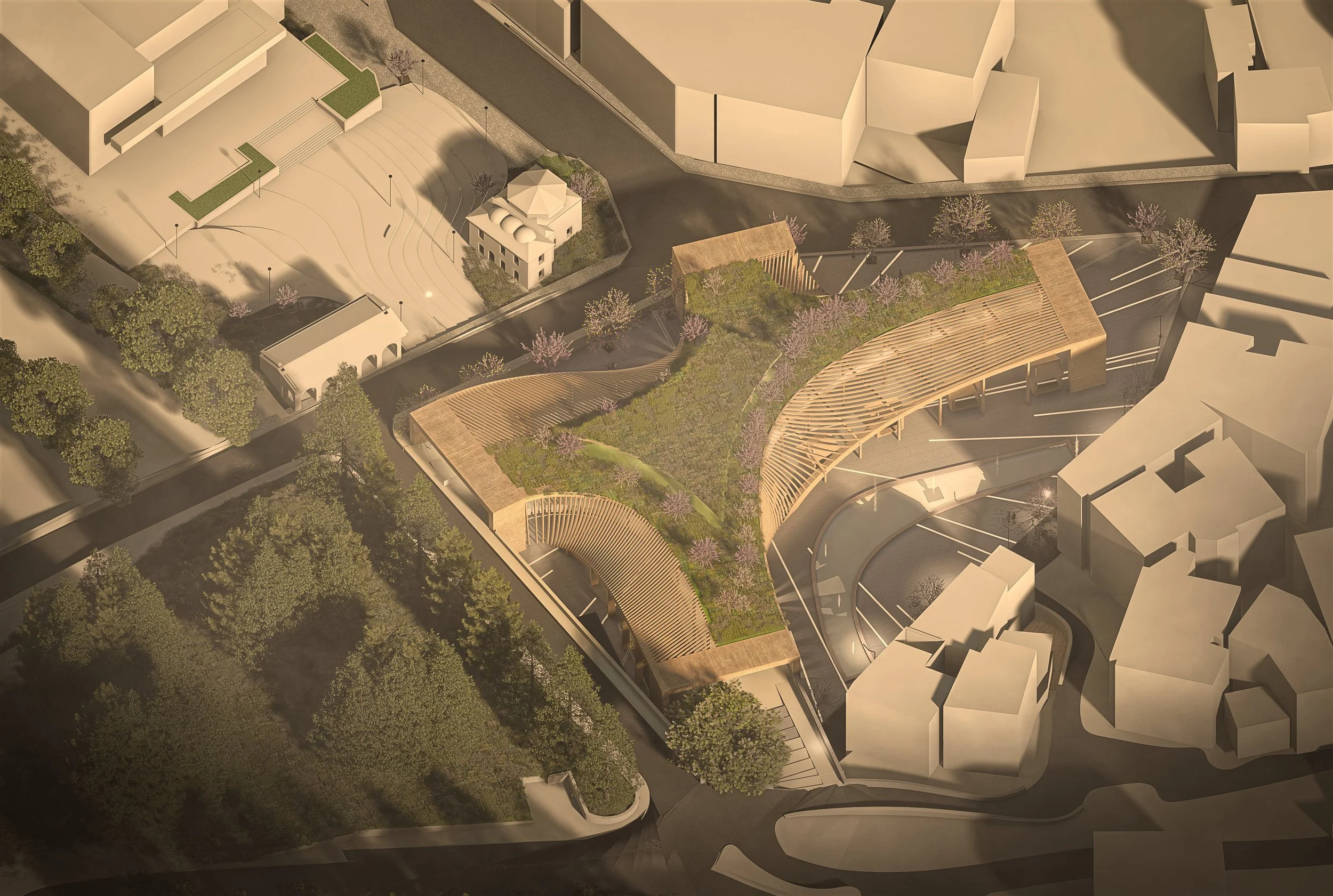
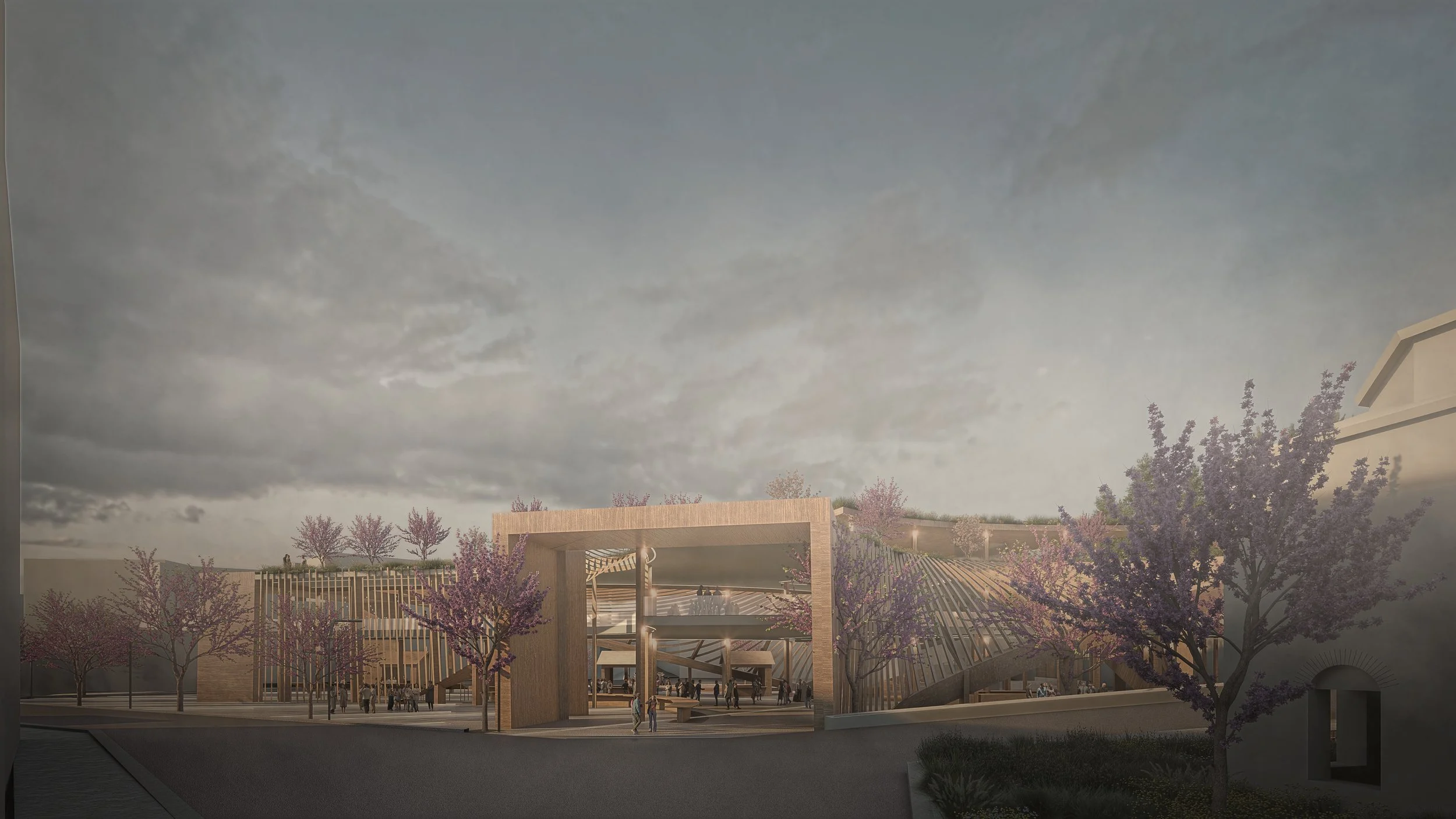
The proposed architectural solution for the New Municipal Market of Agia Marina in Ioannina is conceived as a four-level urban building, one that transcends the conventional role of a marketplace and repositions itself as a crucial urban hub of social, cultural, and economic flows. The composition emerges from an in-depth reading of the urban environment, the site's topographical transitions, and the dynamic movements that traverse the area, shaping a structure that acts not only as a destination but also as a pathway, a connective element between different strata of the city.
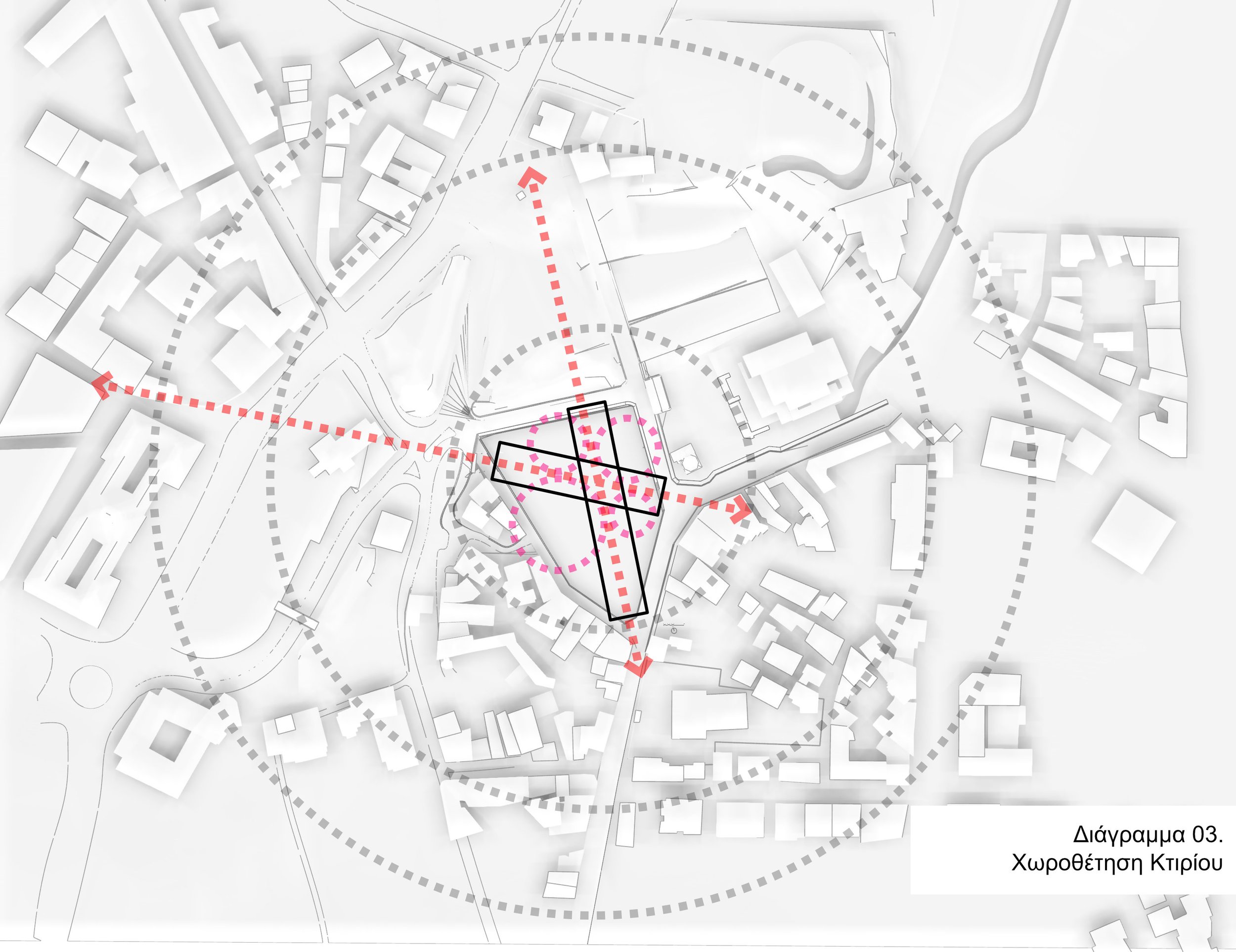
Urban flows, geometries of movement, and a renewed sense of place
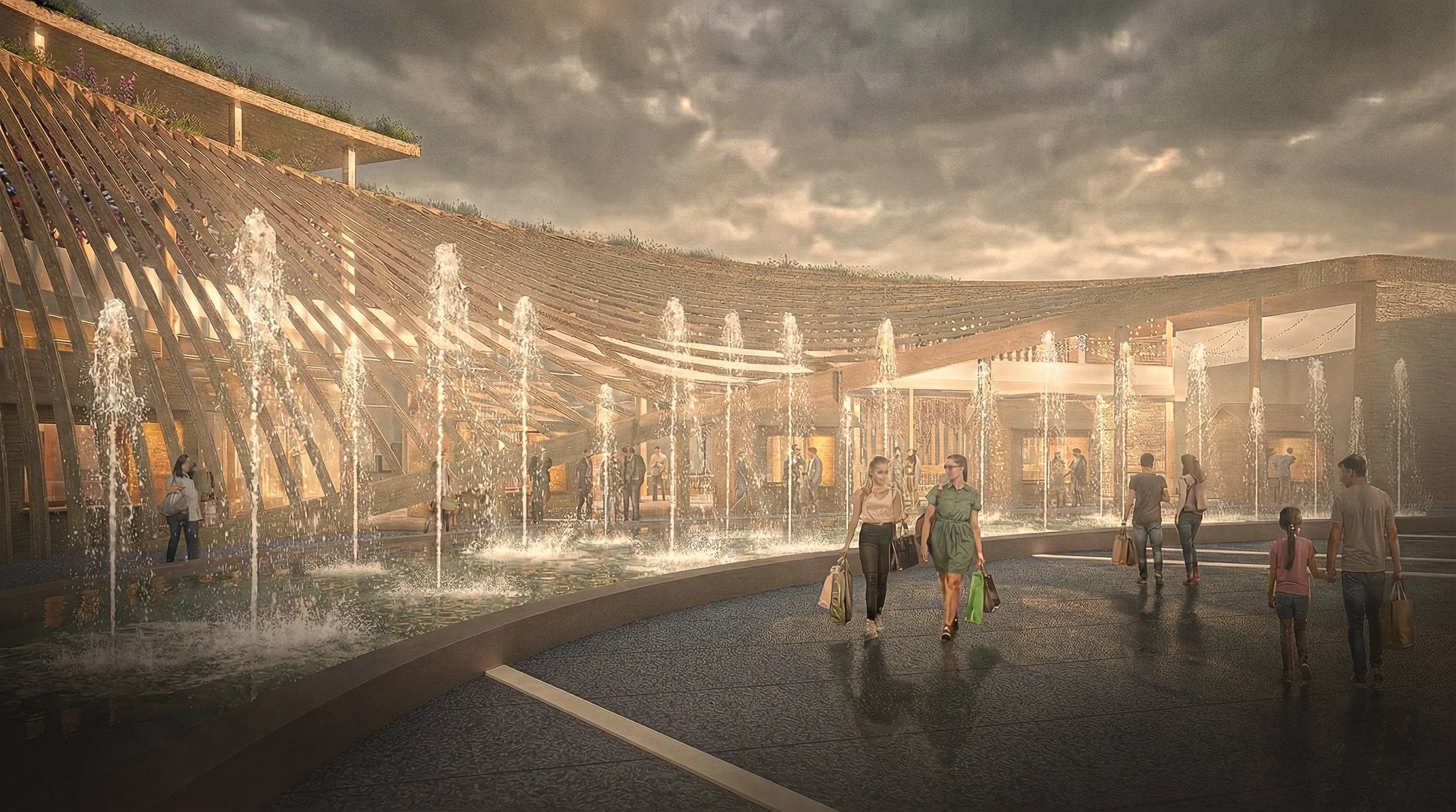
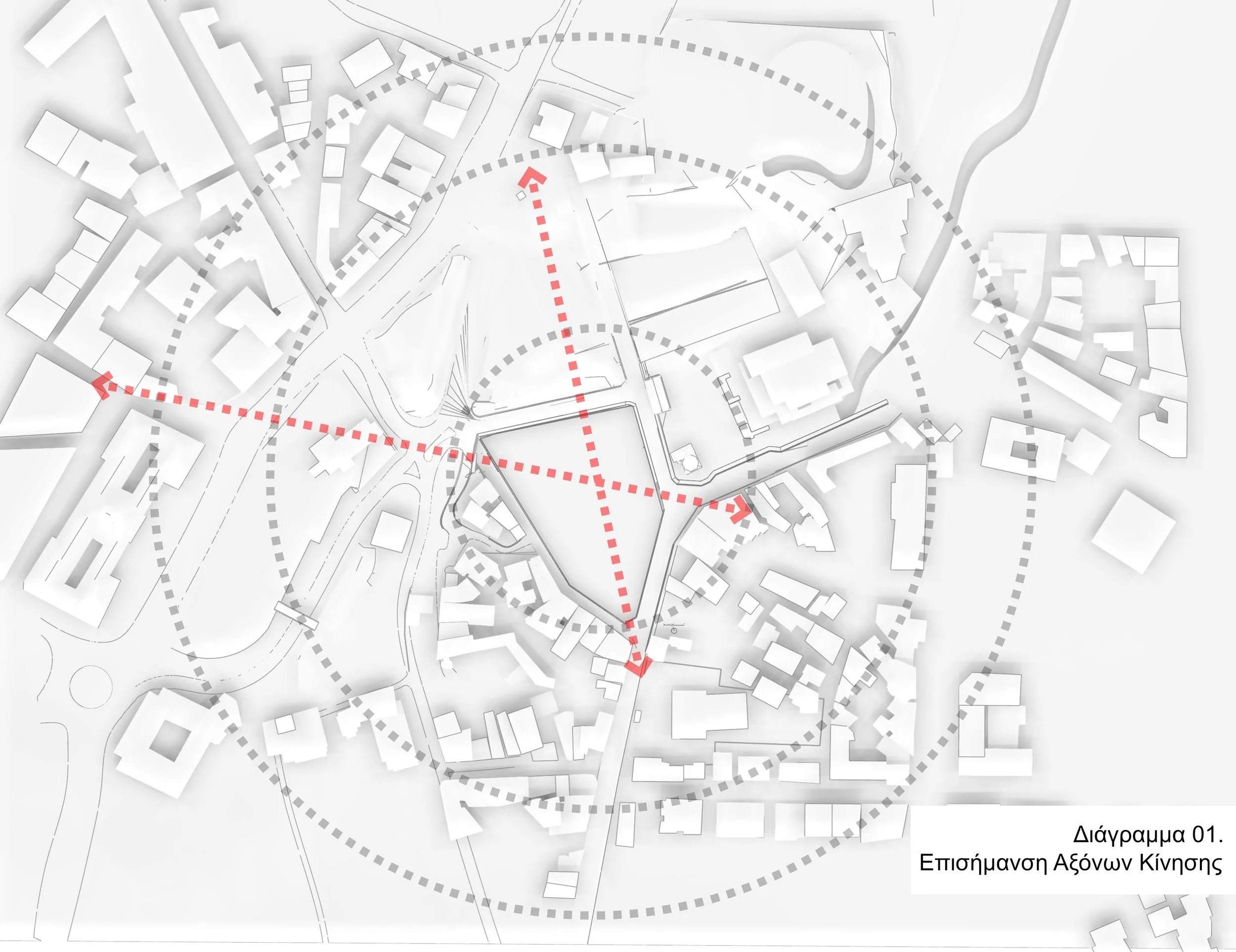
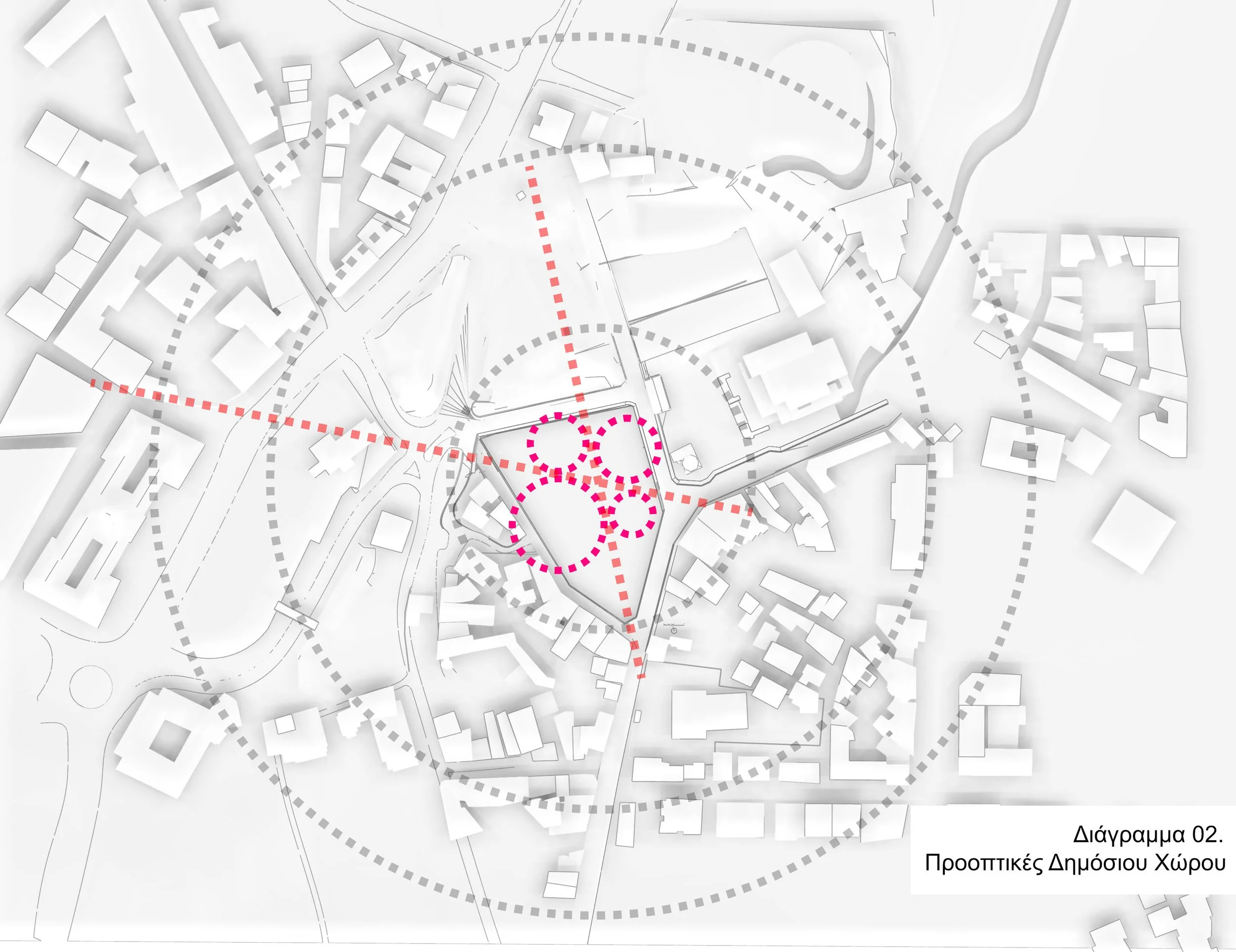
The design is guided by a morphological principle rooted in helical geometries, recursive spatial loops, and directional cues generated by the movements of the city itself. The market is not treated as an enclosed commercial mechanism but as an open field of exchange, a contemporary space where movement, pause, social interaction, and permeability inform the architectural form.
The main circulation axes of the surrounding area become the organizing spines of the proposal. Around them unfold the functions, public interfaces, and semi-outdoor transitional zones. The result is a building with a dynamic form and a strong urban identity—an architecture that resonates with the evolving character of Ioannina and reflects a city in transformation, expansion, and environmental transition.
Integration with the terrain and formation of a continuous public realm
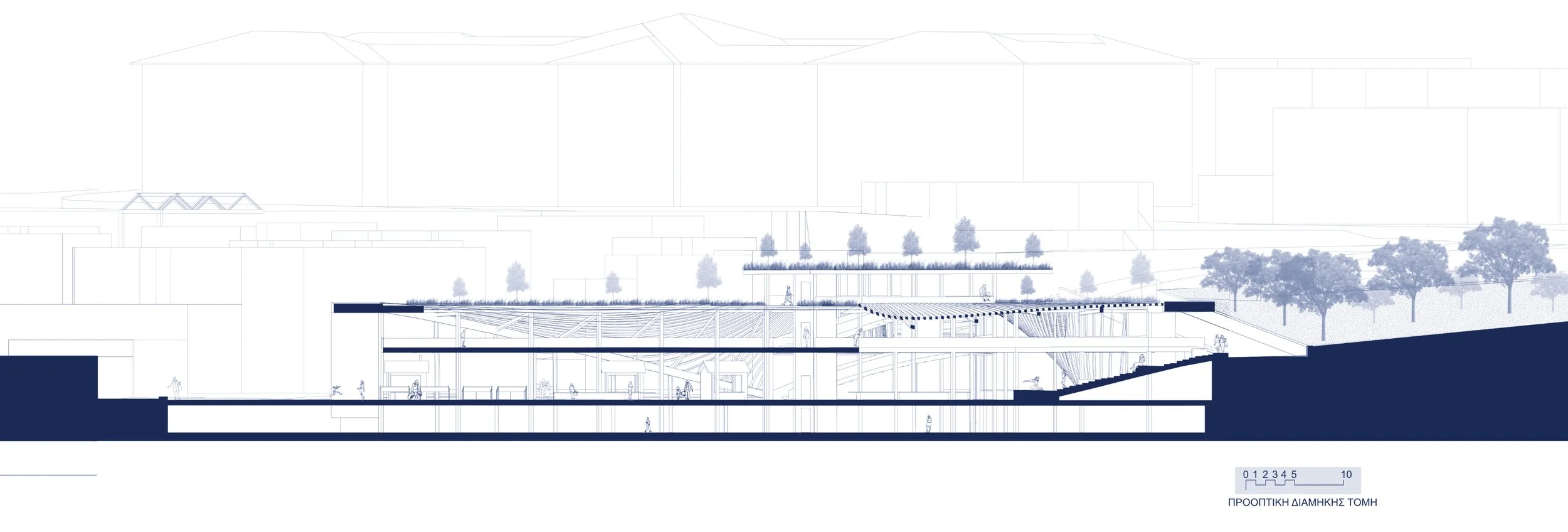
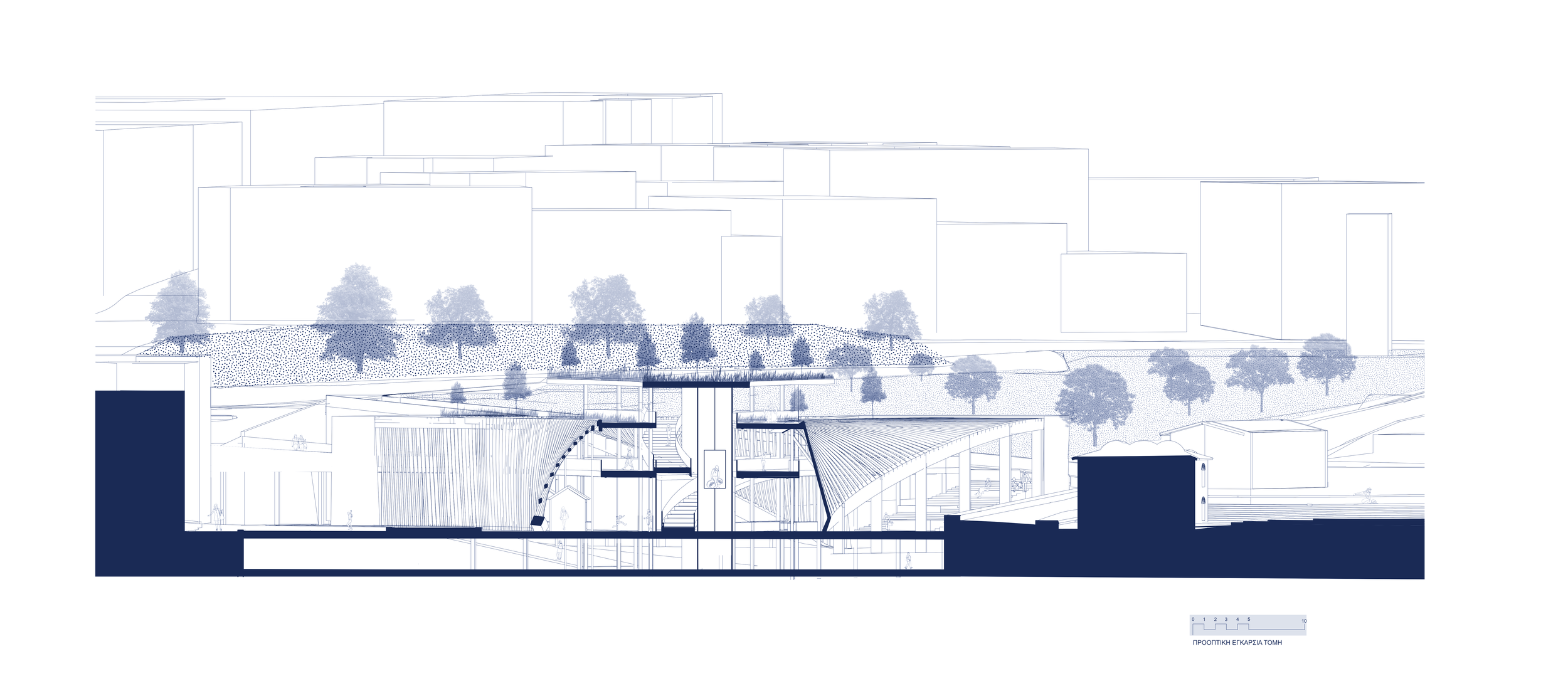
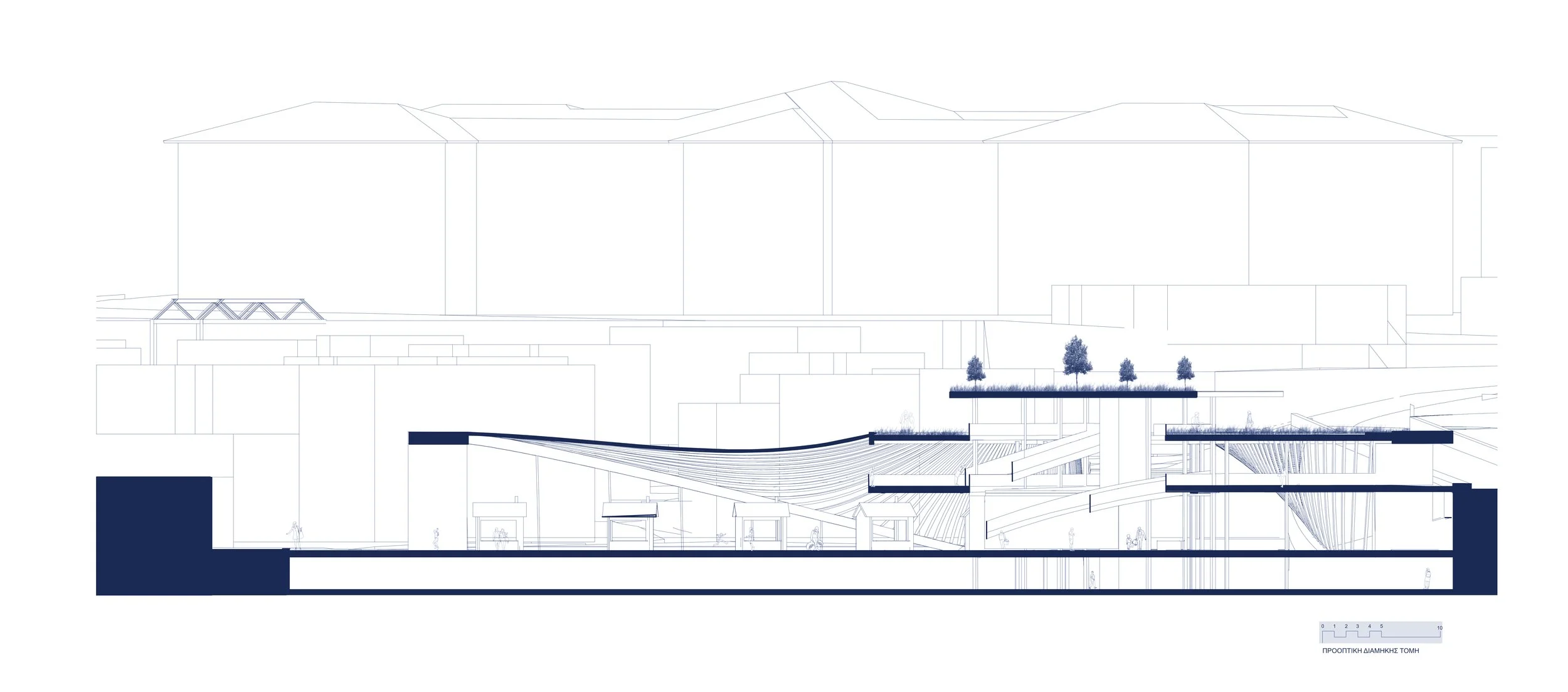
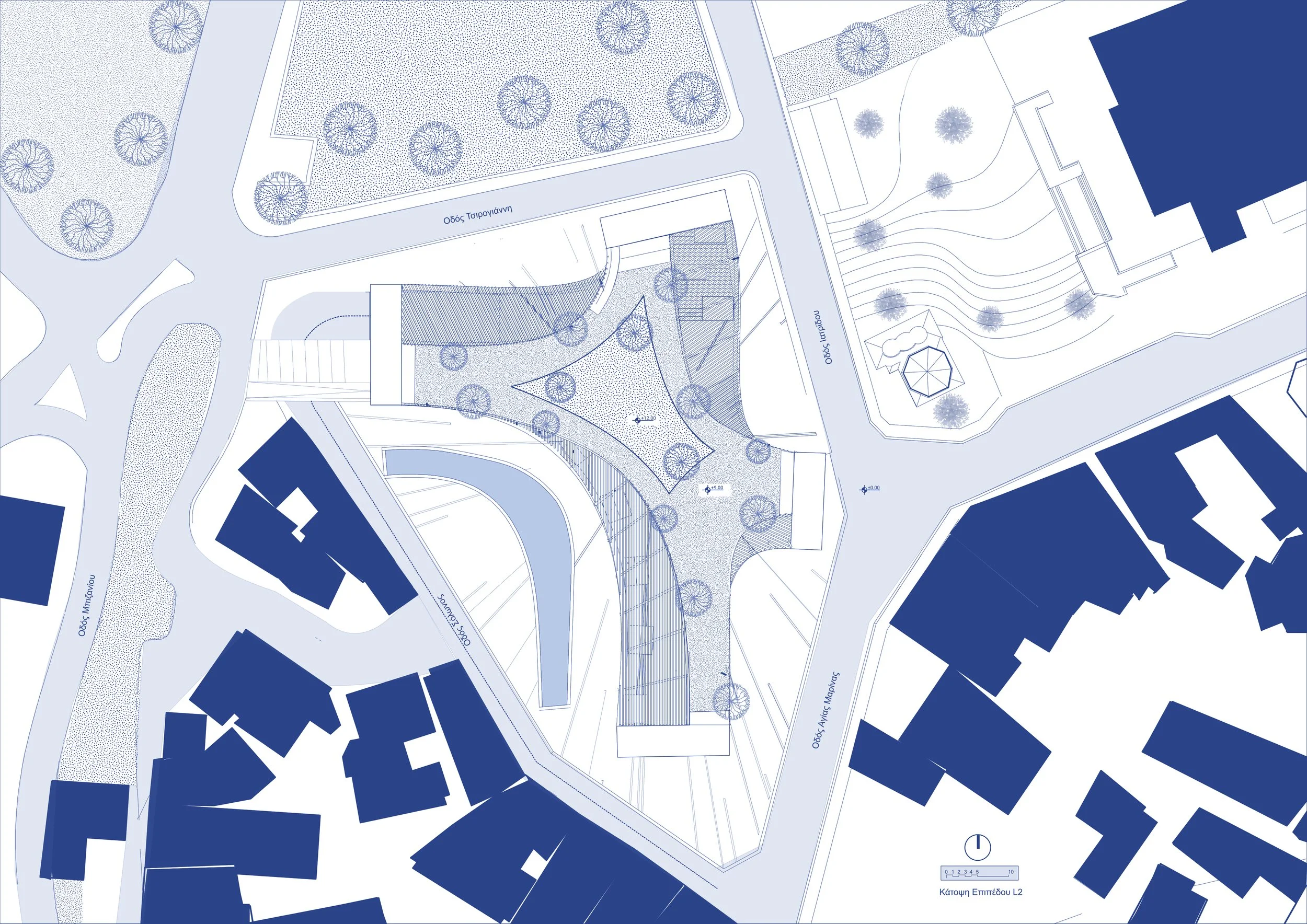
Situated at a strategic point where the city negotiates a significant elevation shift, the site becomes an opportunity for crafting a continuous public sequence, beginning at street level, passing through the market’s interior layers, and culminating on the planted rooftop. Instead of concealing the topographical difference, the design embraces it, converting it into a generator of experience, yielding a sequence of interconnected spaces and routes that merge ground, city, and sky.
This continuum establishes the Municipal Market as an infrastructure of urbanity—a structure that does not operate autonomously but expands the city’s public realm through linked movement corridors, gathering nodes, open-air platforms, and framed views that strengthen collective identity and place-making.
Bioclimatic strategy and environmental neutrality
The architectural approach is deeply rooted in bioclimatic principles, reflecting a commitment to sustainability and environmental responsibility. The design incorporates:
Passive daylighting systems that enhance visual comfort and reduce energy demand
Strategically positioned openings enabling cross-ventilation
Shading devices and light filters that regulate solar gain
Semi-open transitional spaces acting as thermal buffers
Extensive planted surfaces across roofs and intermediate zones, supporting biodiversity, CO₂ absorption, and thermal insulation
The overall strategy aims to produce an environmentally neutral, energy-efficient building, one that remains comfortable, resilient, and socially sustainable.
Programmatic Analysis and Spatial Layers
Level L–1 – Underground parking and logistics
The lowest level hosts a carefully organized parking and logistics zone, designed as an integral part of the market’s operational structure. It includes:
Parking spaces for visitors and staff
Accessible parking (ADA)
Electric vehicle charging stations
Bicycle storage
Dedicated loading/unloading and goods-management areas
Vertical connections ensure smooth, uninterrupted circulation between underground and upper levels.
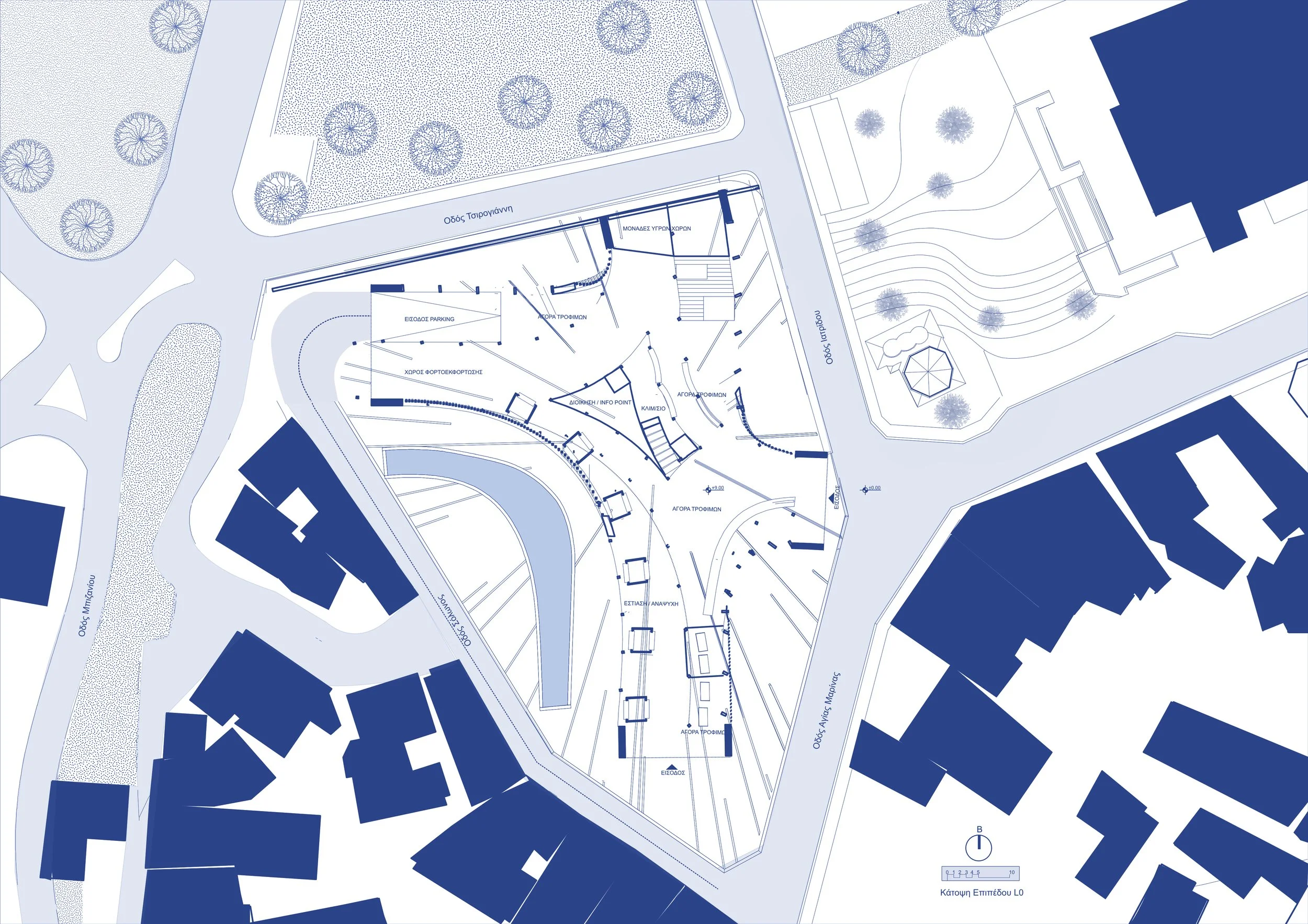
Level L0 – The heart of the food market
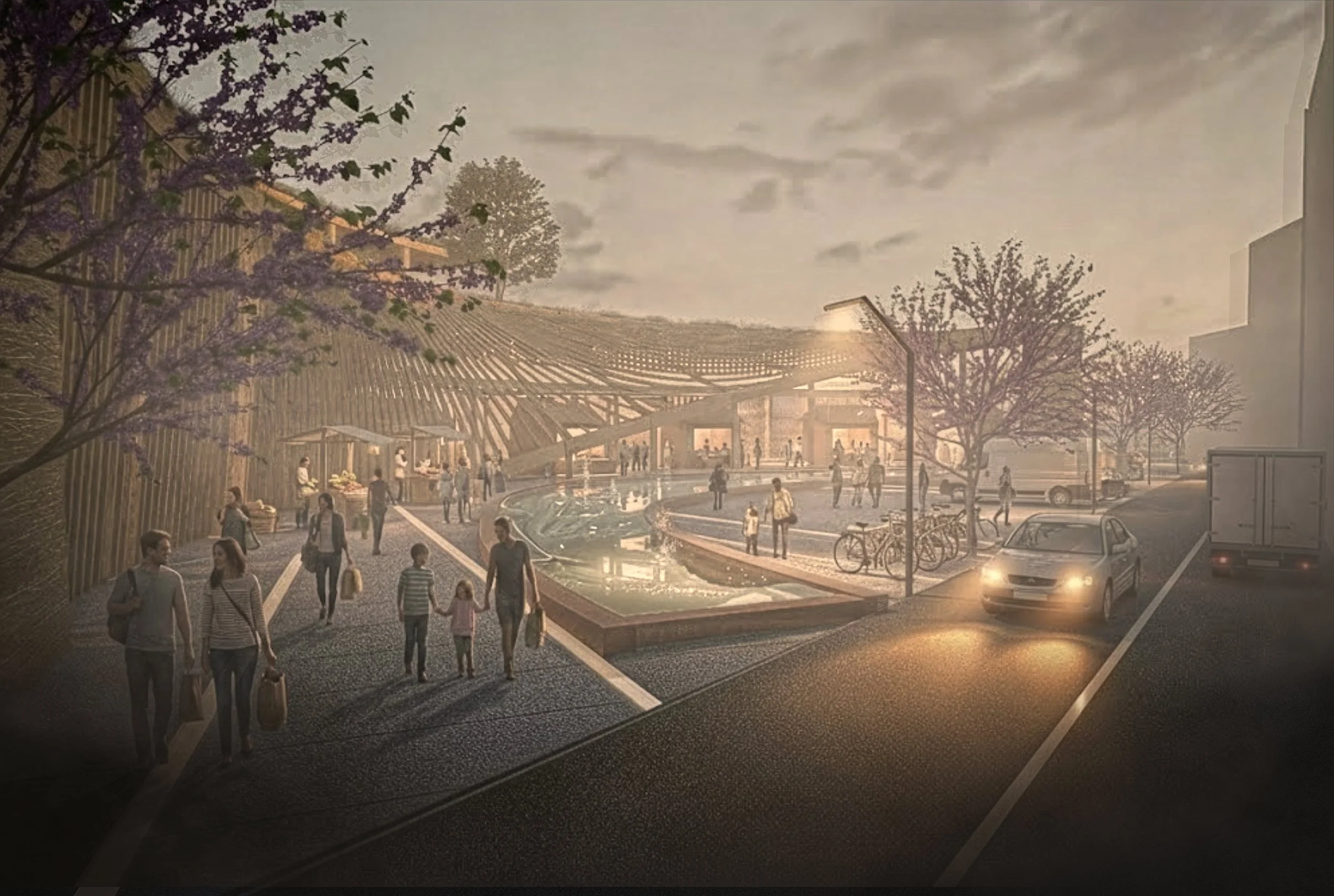
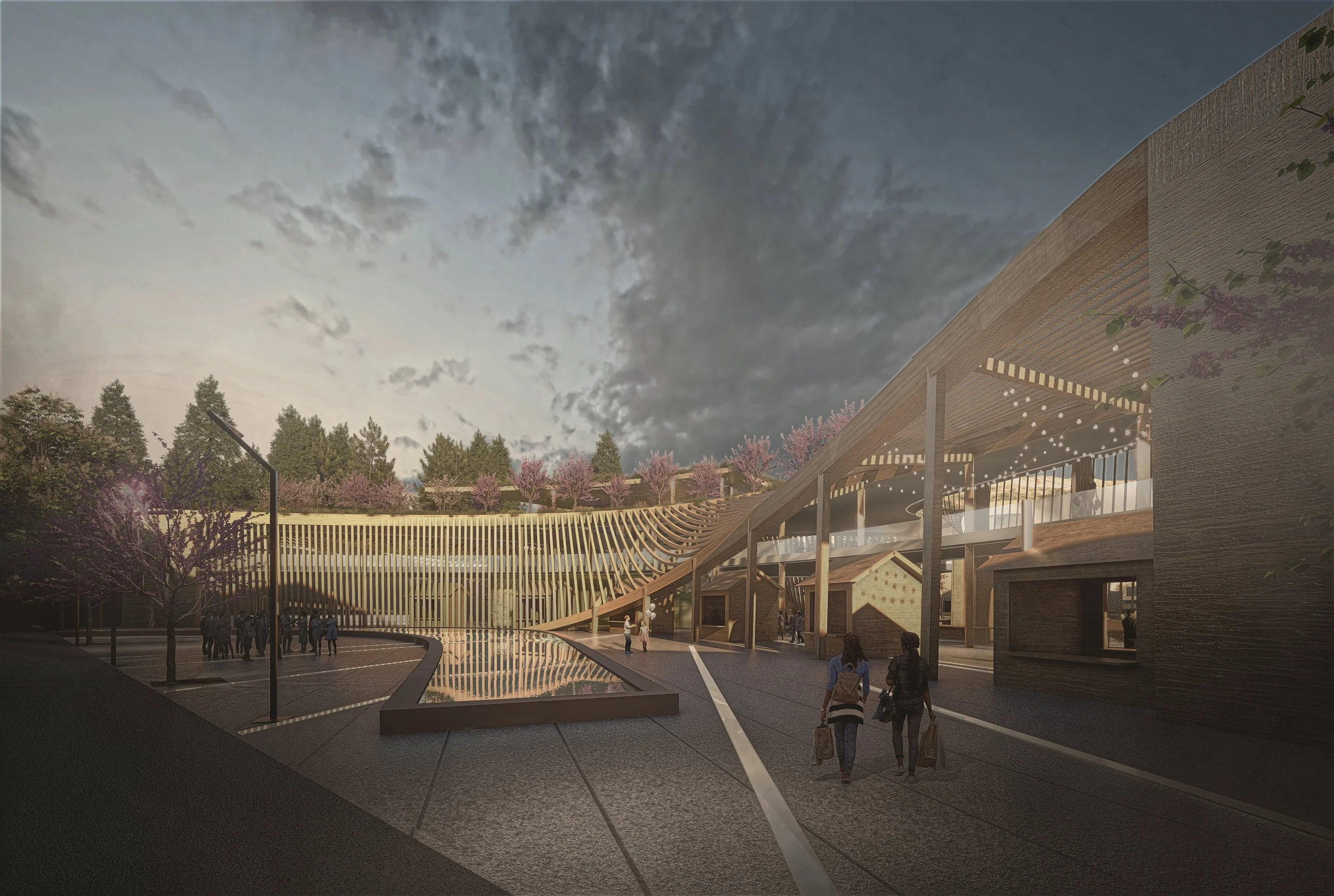
The ground level, accessed primarily from Agia Marina Street, forms the commercial core of the building:
A contemporary food market
Small dining units and quick-service restaurants
Administrative areas and support spaces
Direct continuity with the public street and surrounding open spaces
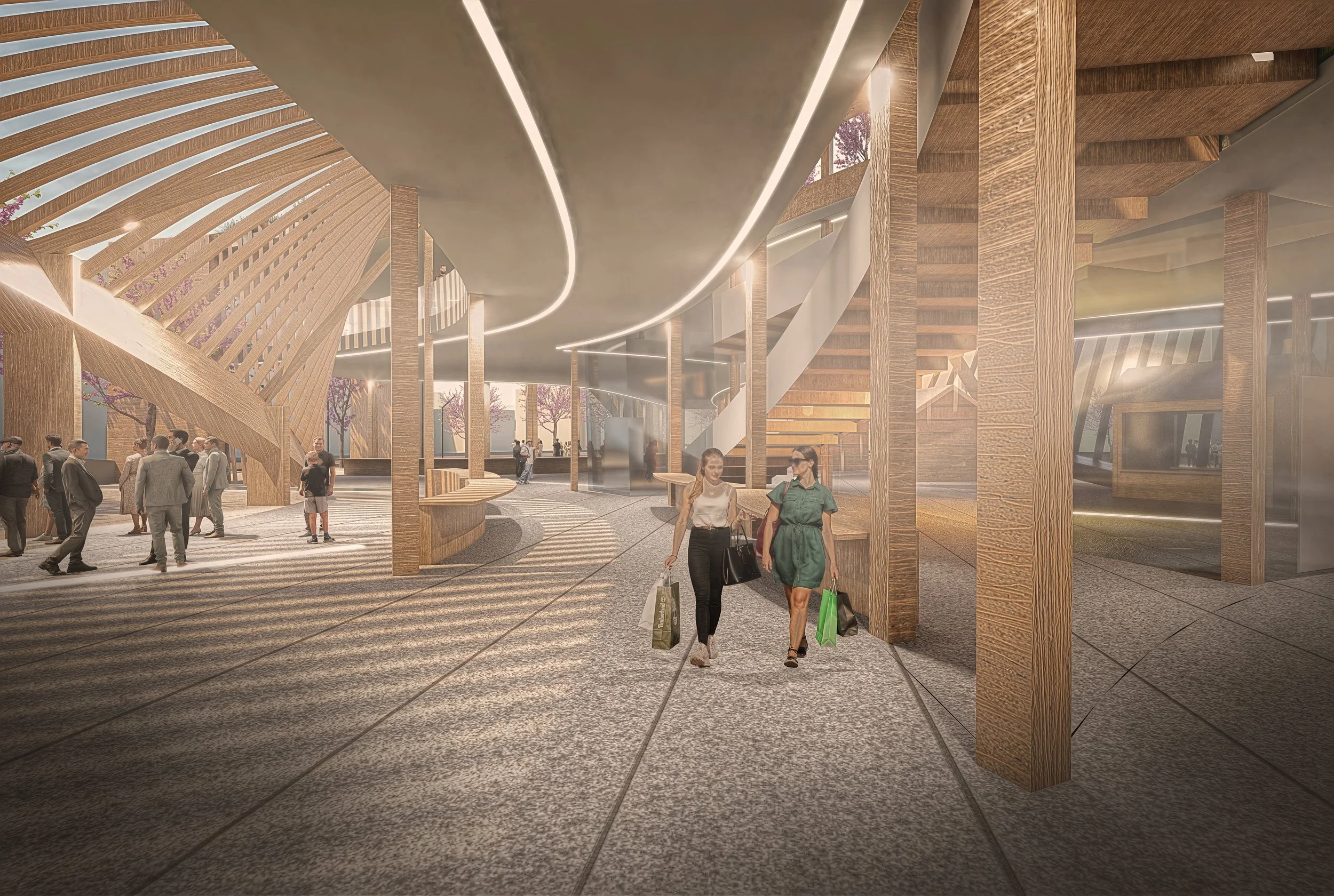
Transparency, permeability, and flowing spatial transitions create an open, welcoming environment that engages directly with urban life.
Level L1 – Retail, gastronomy, and inter-urban flows
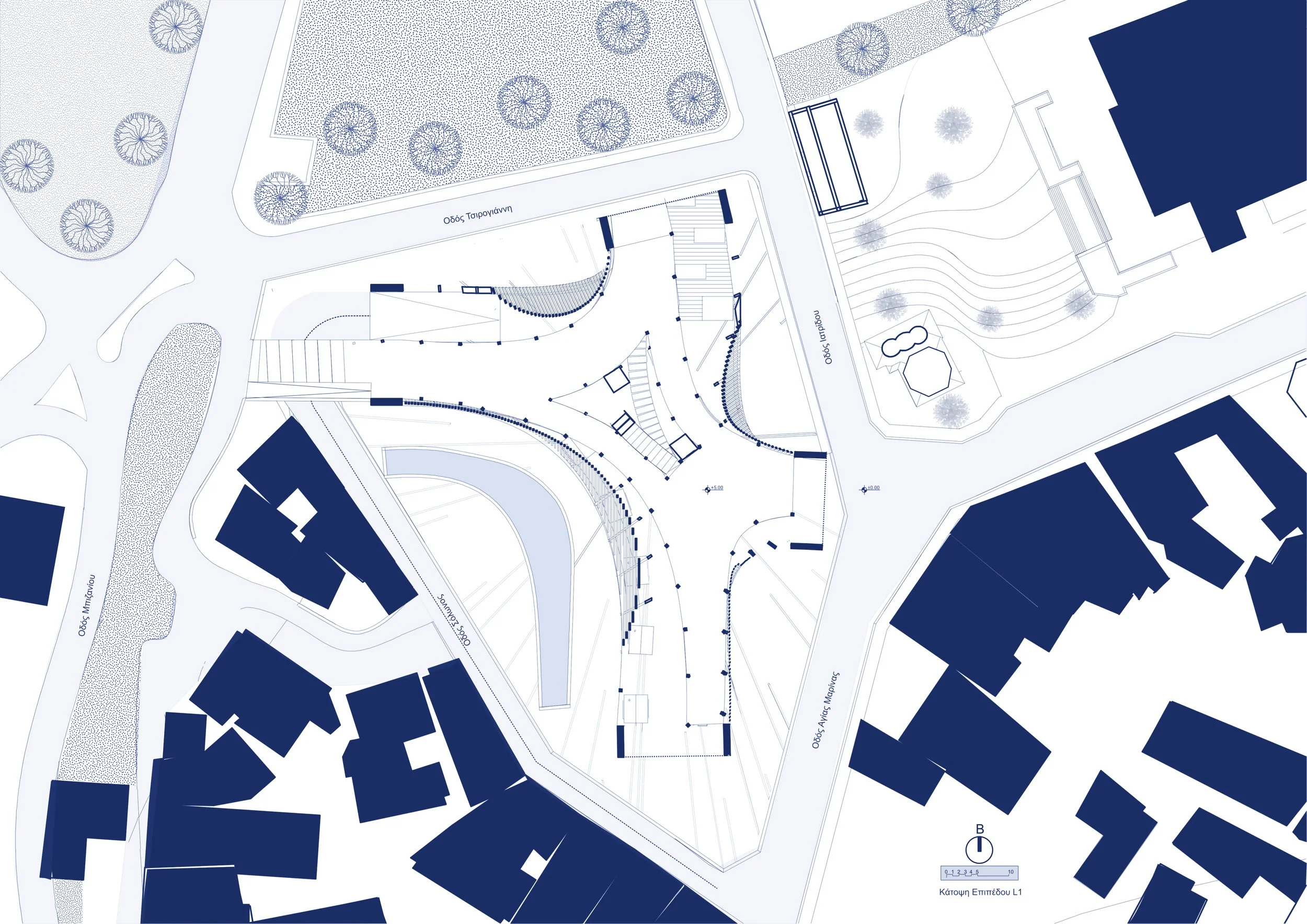
Level L1 serves as a second point of entry from the upper side of the city. It accommodates:
Retail shops
Restaurants and cafés overlooking the urban landscape
Generous semi-outdoor zones for gathering, rest, and social interaction
This level functions as a mediating hub, gathering movement from adjacent neighborhoods and distributing it across the building’s levels and urban directions.
Level L2 – The planted rooftop as a new public square
The uppermost layer transforms the roof into a planted public plaza, elevated 9 meters above ground. This new civic space:
Offers panoramic views of the city
Visually connects key landmarks including the Clock Tower, Agia Marina, Kaloutsiani Mosque, Veli Mosque, and its Madrasah
Hosts social activities, cultural events, leisure, and daily public life
Enhances the building’s bioclimatic performance
Functions as an urban balcony, redefining the relationship between citizens and their city
More than a landscaped surface, the elevated square is a social infrastructure—a contemporary forum where memory, everyday life, and cultural identity coexist.